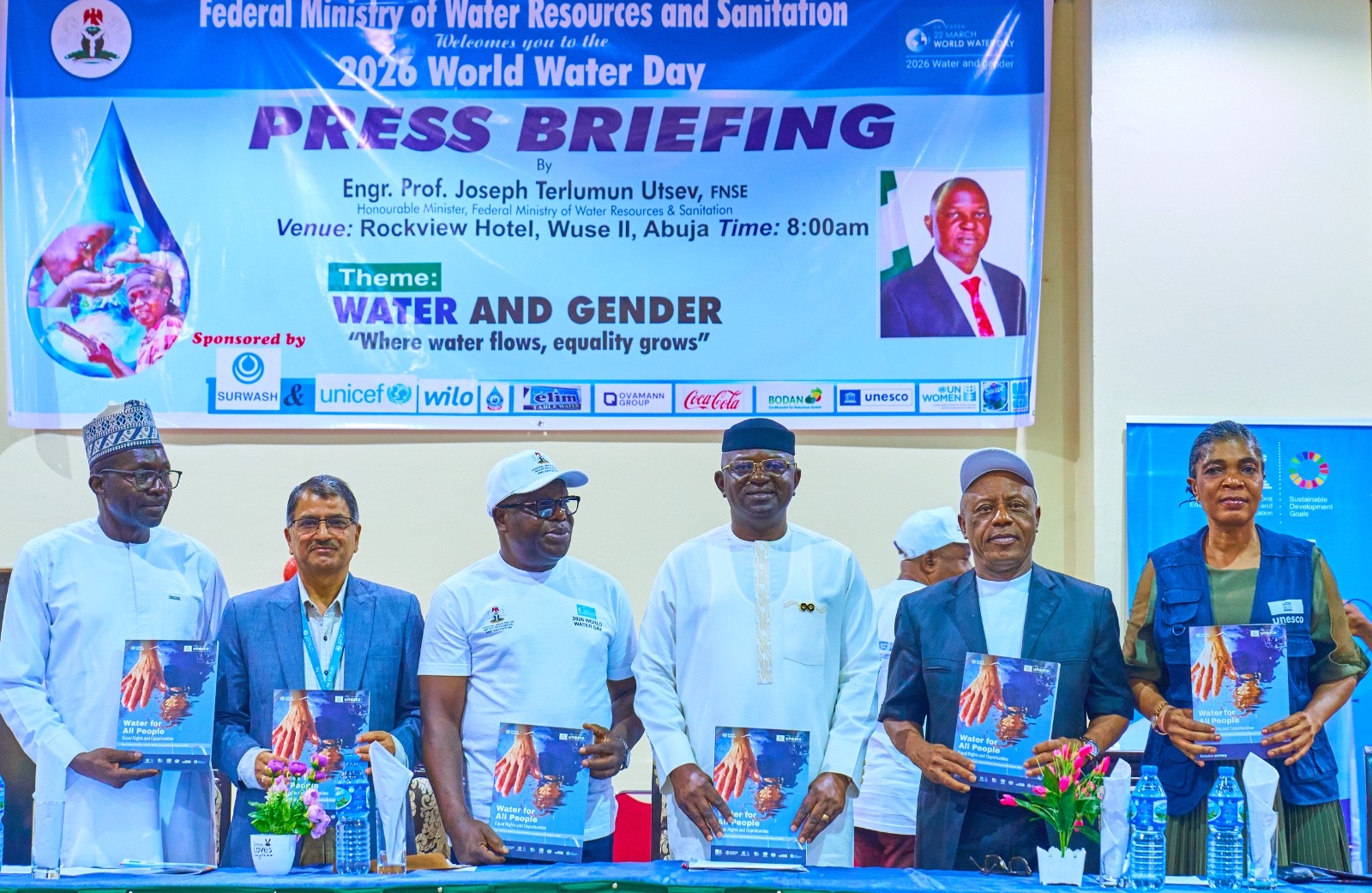
The Federal Government has called for stronger collaborations and increased participation of women in water governance to ensure equitable access to water and sanitation nationwide. This call is in line with the theme for the 2026 World Water Day, which highlights the importance of freshwater and promotes sustainable management of water resources globally.
The Minister of Water Resources and Sanitation, Prof. Joseph Utsev, made the call at a news conference to commemorate the day. He noted that water scarcity and poor sanitation disproportionately affect women and girls, limiting their health, dignity, safety, and economic opportunities. The minister stressed that inclusive governance and women's participation are essential for sustainable development and national growth.
The ministry has made significant strides in water and sanitation provision. Over 6,700 water schemes have been constructed and rehabilitated, providing safe drinking water to more than 32 million Nigerians. Rural interventions have benefited over two million people, while additional projects were implemented across several states.
The ministry has also made progress in sanitation, constructing over 5,238 public facilities and certifying 162 local government areas as open defecation-free. Awareness campaigns were strengthened with jingles in several languages. Two National Water Quality Reference Laboratories have been completed to enhance monitoring and protect public health.
The Federal Government's call for stronger partnerships and women inclusion in water governance is a welcome step towards ensuring equitable access to water and sanitation nationwide. However, the reality on the ground tells a different story. Many Nigerians still lack access to safe drinking water, and the burden of water scarcity disproportionately falls on women and girls. The Minister of Water Resources and Sanitation, Prof. Joseph Utsev, must be held accountable for translating these lofty goals into tangible actions. The construction of water schemes and rehabilitation of existing ones are commendable, but more needs to be done to reach the over 32 million Nigerians who still lack access to safe drinking water. The government's focus on inclusive governance and women's participation is also crucial. Women's participation in water governance is essential for sustainable development and national growth. However, the government must do more to ensure that women's voices are heard and their contributions valued in the decision-making process.