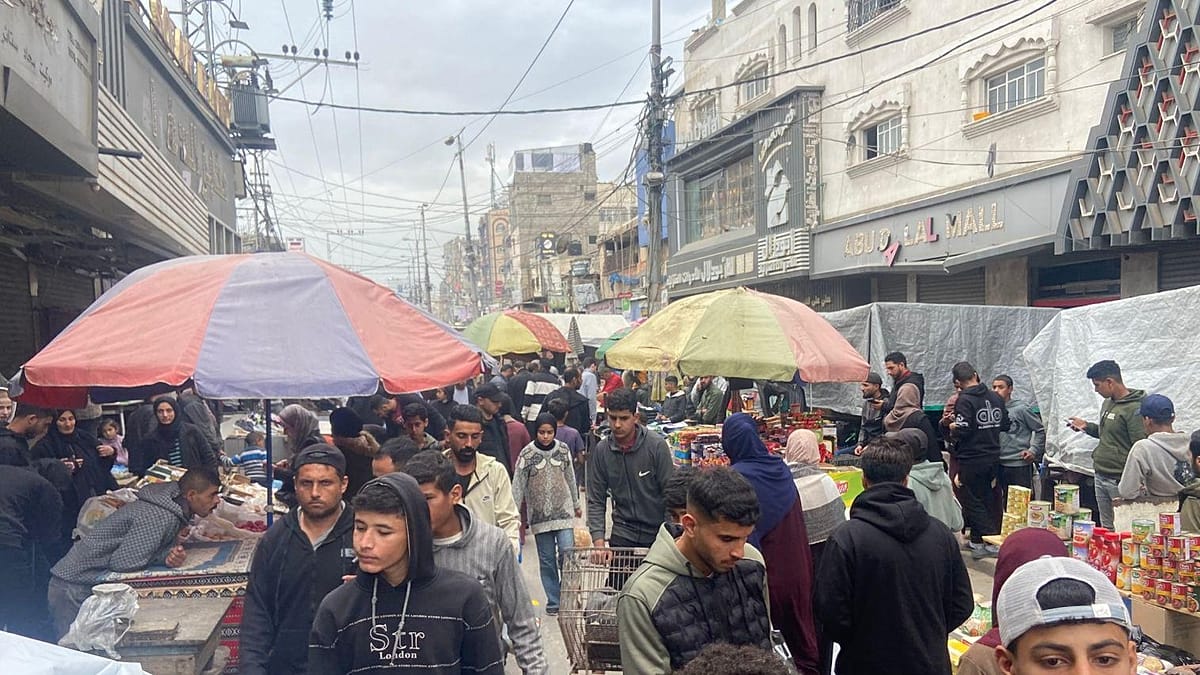
Gaza's Cash Crisis: Small Banknotes Vanish, Prices Soar Amid Devastation
The Gaza Strip is facing a severe cash crisis, with a shortage of small-denomination banknotes crippling the local economy. Vendors across the territory are refusing to complete sales without exact change, leaving customers with little option but to accept goods they do not need or leave markets empty-handed. This has become a daily struggle for many residents, with some even forced to leave home without small bills.
The situation is further exacerbated by the rise in prices, with fares between Khan Younis and Gaza increasing from approximately 6 shekels (€1.65) before the Israel-Hamas war to between 20 and 25 shekels (€5.50-€7). Imported petrol prices have also surged, making it difficult for residents to travel and work.
The Israeli new shekel has become the dominant currency in Gaza, with the dollar and dinar in decline. The blue 200-shekel note, worth some €55, now dominates transactions, accounting for approximately 80% of the total cash value in circulation. This has led to a system known as "takiesh," where bank balances are converted into physical currency for steep commissions.
The crisis has significant implications for the local economy, with many residents unable to access basic necessities due to the lack of small banknotes. Experts warn that the situation is likely to worsen unless a solution is found to address the cash shortage.
The cash crisis in Gaza highlights the devastating impact of war on local economies. The shortage of small banknotes has created a ripple effect, exacerbating the already dire situation in the territory. The rise in prices and the dominance of the Israeli new shekel underscore the need for a more sustainable economic solution. As the international community continues to provide aid, it is essential that efforts are made to address the underlying issues driving this crisis.