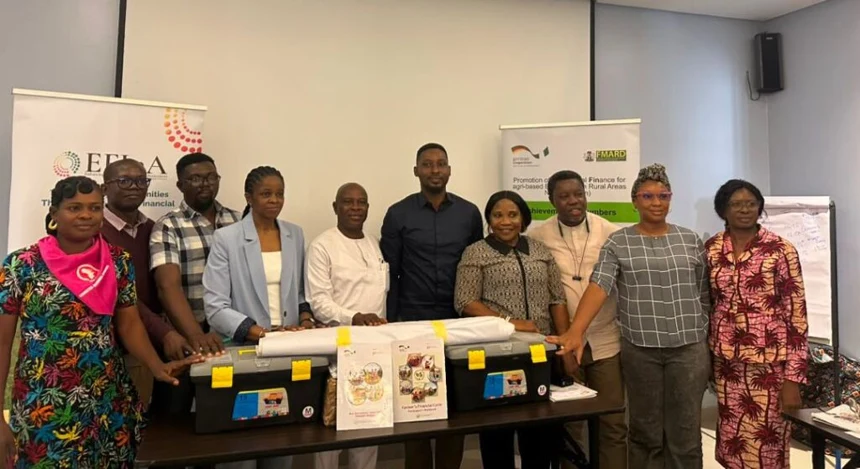
EFInA and the German government-backed Global Project Promotion of Agricultural Finance for Agri-based Enterprises in Rural Areas (GP AgFin) have completed a nationwide capacity-building programme targeting financial inclusion in Nigeria's rural agricultural sectors. The initiative trained civil society organisations, microfinance banks, fintechs, and digital financial service providers across all six geopolitical zones. Participants included national farmers' associations, women-focused groups, grassroots organisations, and financial institutions serving smallholder farmers and low-income populations.
The programme featured two training tracks. The first, Farmers Financial Literacy (FFC) and Micro Agric-Enterprise Training (MAT), equipped CSOs and associations with standardised financial education tools and Training-of-Trainers support to pass knowledge to smallholder farmers and micro-business owners. The second track, Agriculture Value Chain Financing (AVCF) and Business Model Analysis (BMA), focused on strengthening the agricultural lending skills of microfinance banks and financial providers, including cashflow-based credit assessment, women-targeted product design, and consumer protection.
Foyinsolami Akinjayeju, chief executive officer of EFInA, stated the initiative responds to persistent gaps in Nigeria's financial inclusion drive. "EFInA exists to turn data into action for inclusive financial systems that improve lives and livelihoods. For years, data has been telling us the same thing: financial services access in Nigeria is growing, but depth remains shallow for too many people, particularly women, rural populations and agricultural communities," she said. The partnership with GIZ's GP AgFin Project aims to ensure institutions closest to underserved groups can deliver sustainable financial solutions that enhance resilience and economic outcomes.
EFInA points to shallow financial inclusion despite rising access, yet continues to roll out training instead of measuring tangible impact on rural livelihoods. The same data it cites has highlighted this gap for years, raising questions about whether new programmes are filling it or just extending it. Training intermediaries does not confirm farmers have better financial outcomes. Without proof of changed realities for smallholder farmers, the cycle of reports and workshops risks becoming the outcome itself.
Editorial note: AI-assisted opinion, not established fact. Full disclaimer →


