Daniel Bwala’s Interview Looks Even Worse After the Maiduguri Bombings
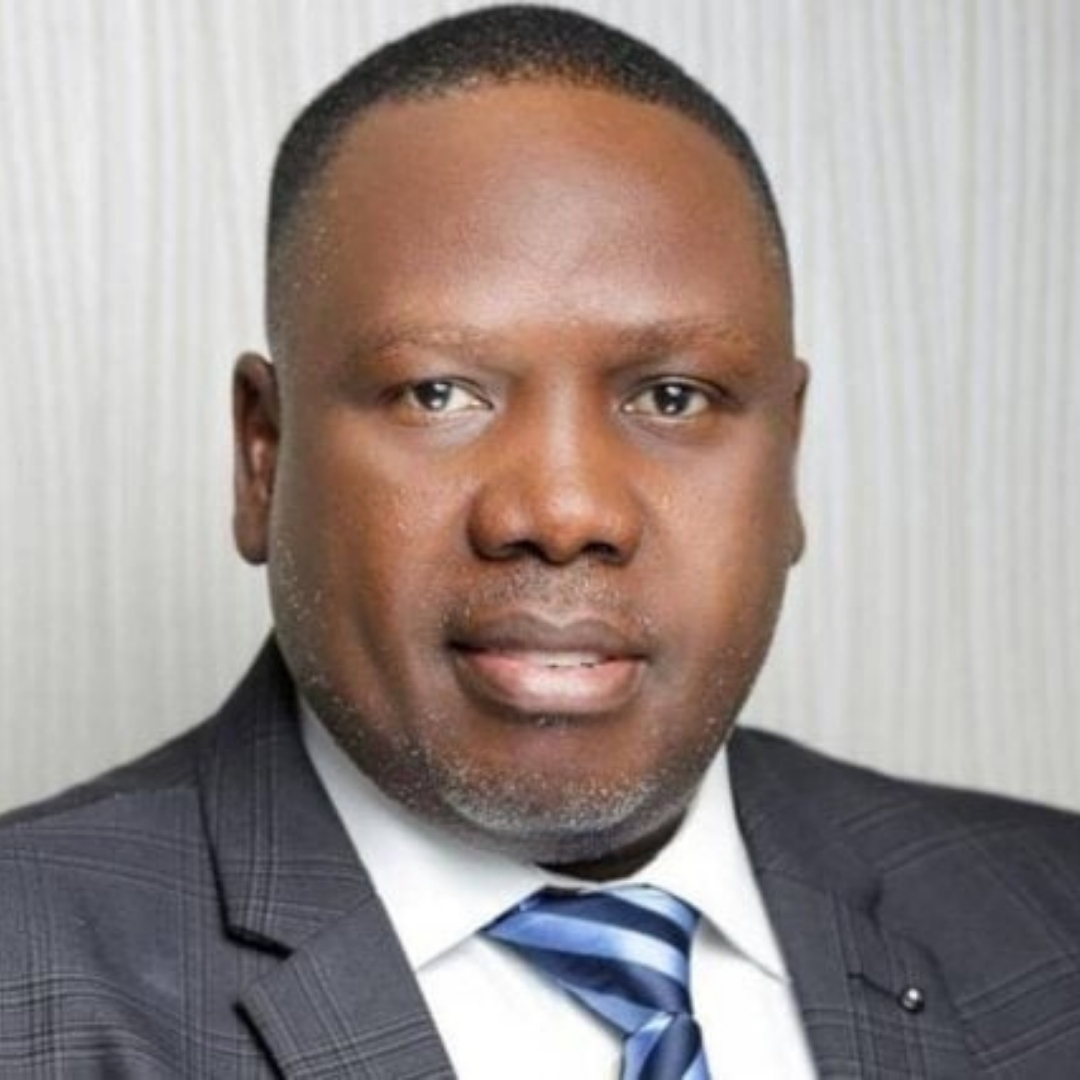
Roughly a week ago, on Friday, March 6, Daniel Bwala, Special Adviser on Media and Policy Communications to President Bola Tinubu, appeared on Al Jazeera’s Head to Head programme to discuss the insecurity and corruption in Nigeria, as well as the role of the Tinubu administration in addressing these issues.
The episode, titled “Renewed Hope” or “Hopelessness,” was aimed at putting Bwala in the hot seat over the flagship agenda of the All Progressives Congress (APC) ahead of the 2027 elections.
Joining Hasan in holding the government to account was a panel of three voices: Aanu Adeoye, a journalist with the Financial Times; Ayisha Osori, a lawyer and policy expert with the Open Society Foundations; and Tunde Doherty, the chairman of the APC UK chapter.
Hasan and the panel pressed Bwala on the metrics that matter most to ordinary Nigerians: rising insecurity, deepening poverty, persistent corruption, and a government whose credibility is increasingly difficult to defend with a straight face.
One of Bwala’s astonishingly disgraceful claims was that the state of insecurity in Nigeria was not getting worse but needed context. Following the suicide bombing in Maiduguri on March 16, we can’t help but look back on Bwala’s comments and the entire interview.
The OG Anti Tinubu Guy
Before we get into the details of the interview, it is important to know who Daniel Bwala is, or rather, who he used to be.
During the buildup to the 2023 presidential elections, he served as the spokesperson for former vice president Atiku Abubakar’s presidential campaign under the People’s Democratic Party. He was one of Tinubu’s loudest critics, raising pointed questions about his fitness for office. Following Tinubu’s appearance at Chatham House in December 2022, Bwala argued that Tinubu’s strategy of delegating questions to his aides was an “abdication of responsibility” and compared electing him to attending a “night of a thousand laughs.”
Bwala’s criticism of Tinubu was so sharp that in late 2022, in an X post that has since been deleted, he proclaimed that “the human brain is unique… until you join APC, then it stops working.” He is now a paid employee of the APC presidency, defending that same man on international television. This, of course, naturally leaves anyone who has ever seen Bwala’s famous post wondering if his brain has been affected.
Hasan replayed Bwala’s own words back to him, and if he expected the man to take some sort of accountability, he was sorely mistaken, because Bwala did no such thing. Faced with what can be crowned the most embarrassing moment on TV, Bwala said unabashedly that he was playing opposition politics. It was his job to speak against Tinubu then, so he did it.
Bwala’s approach throughout was not to engage with difficult facts but to contextualise them into irrelevance, a strategy that doesn’t work when the facts and lived realities of Nigerians point to a clear decline in living standards.
Get More Zikoko Goodness in Your Mail Subscribe to our newsletters and never miss any of the action Zikoko Daily Ships Money by Zikoko Her Subscribe
Daniel Thinks The Glass is Half Full.
The security figures Hasan cited are difficult to dispute. Nigeria recorded approximately 11,000 deaths from violence in 2025, up from 8,700 in 2023, a 26% increase. Nigeria ranks among the five most dangerous countries in the world. Kidnapping, he noted, has become a “profit-seeking industry.”
Bwala’s response was to raise a glass of water. No, he literally raised a glass of water.
He argued that the same glass looks half full or half empty depending on who is looking and that Western critics are simply choosing to see Nigeria’s progress as decline. According to him, the insecurity crisis is not getting worse but is being misread and requires context. Context. Everything, in Bwala’s defence rhetoric, requires context. We don’t know what Bwala’s definition of worse is, but we’re pretty certain that a 26% rise in violent deaths is not a matter of context.
He added that terrorism is a “hydra-headed” global problem, that Nigeria is conducting joint operations with the US and Turkey. What he could not adequately address was the human cost of pursuing that supposed progress. Hasan raised accounts of several civilian casualties documented by Amnesty International, which has also flagged a pattern of military impunity. Bwala insisted operations targeted terrorists, not homes and residential areas.
To be fair, insecurity in Nigeria predates Tinubu. But “it was already bad before us” is not a defence when the numbers are constantly increasing on your watch. And insisting that they aren’t, on international television, with a straight face, is not context. It is a lie.
“I didn’t say that.”
We need to talk about Daniel Bwala’s memory and how conveniently it fails him. Hasan confronted Bwala with allegations of political violence, financial criminality, and election fraud that he had made publicly before joining the Tinubu administration. He said that Tinubu had created and funded a militia, that this same camp had issued death threats against him, and that the 2023 election was so corrupt he couldn’t eat for three days after the results came in. Bwala denied all of it.
These allegations were made by the same man now being paid to tell you everything is fine. The clips of him making these allegations exist, and they’re not hard to find. At some point, the question stops being whether Bwala is just lying and starts being whether he thinks Nigerians are too lazy to check.
Only Drunk People Think Tinubu is Corrupt
The corruption exchange was where the interview became most visibly uncomfortable for Bwala. Hasan brought up two specific and damaging points: Tinubu’s own US drug forfeiture case and his appointment of Abubakar Bagudu as Minister of Budget and Economic Planning. According to the US Department of Justice, Bagudu embezzled and defrauded billions of naira from Nigeria during the Abacha regime; a case that was eventually settled for $163 million. That this man now oversees Nigeria’s economic planning is a detail that the majority of Nigerians can’t seem to wrap their heads around and one that the administration has never adequately explained.
Bwala’s defence on both counts was the same: Nigerian courts have cleared the relevant issues, and there are ongoing probes. This is a legally defensible position. It is not, however, a morally satisfying one, particularly for a government that has made anti-corruption part of its “Renewed Hope” messaging. Appointing someone with that background to a position of authority sends a specific message about what the administration considers disqualifying and apparently, a $163 million settlement is not it.
Additionally, Hasan noted that the Organised Crime and Corruption Reporting Project (OCCRP) named Tinubu as a finalist for its 2024 Corrupt Person of the Year award. A 2025 poll found that two out of every three Nigerians believe Tinubu and his team are corrupt. Bwala’s response to this was to dismiss it as a statement from — in his words — “those are drunken people.“
Short-Term Pain, Long-Term Crap
On the increasing poverty rate and the economy, Bwala was at his most technically competent and most politically tone-deaf mode simultaneously.
According to the National Bureau of Statistics, over 120 million Nigerians currently live in multidimensional poverty — a number projected to rise to 141 million by 2026. Approximately 18 million children are out of school, according to the UN. Hasan further noted that around 20,000 schools have been shut down due to insecurity. These are not opposition statistics; these are verifiable facts.
Bwala acknowledged the “short-term pain” from the fuel subsidy removal but pointed to improved foreign reserve health, reduced net import dependency, and praise from the IMF and World Bank as evidence that reforms are working structurally. Aanu Adeoye of the Financial Times was asked directly whether the average Nigerian is doing better under Tinubu. His answer was a flat no. Ayisha Osori of the Open Society Foundations rated the security situation 1 out of 10. These are not partisan voices. These are informed, independent analysts, and neither of them bought what Bwala was selling.
Bwala’s economic argument essentially asks ordinary Nigerians to trust that the pain is temporary and the structure is sound. That is a reasonable ask if you are not one of the 120 million people currently living in poverty while waiting for the structure to “catch up”.
Conclusion
Bwala is good at his job, in the narrow sense that he never ran out of things to say, albeit lies. The problem is that most of what he said was either false, contradicted his own prior statements, or relied on a definition of “context” that we still don’t understand to date.
A government that is doing well rarely needs a spokesman this busy defending it. And a spokesman worth trusting rarely needs to delete his old tweets.
With 2027 approaching, these questions are not going away. The only thing that remains to be seen is whether Bwala’s next set of answers will be any more honest than these were and if we can even trust anything he says.
We want to hear about your personal experiences that reflect how politics or public systems affect daily life in Nigeria. Share your story with us here—we’d love to hear from you!
Source: Original Article • AI-enhanced version for clarity & Nigerian context
Related Stories