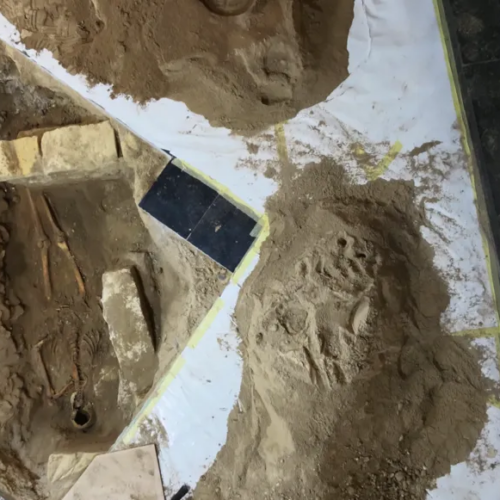
A potentially groundbreaking discovery has been made in the Netherlands, with the possible identification of the remains of d'Artagnan, the legendary captain-lieutenant of the King's Musketeers. The skeleton, unearthed from beneath the floor of a church in Maastricht, may hold the key to solving a centuries-old mystery.
Forensic experts are currently analyzing the remains, with a DNA sample being sent to Germany for comparison with living relatives of d'Artagnan. Meanwhile, a team of forensic anthropologists in Deventer will examine the skeleton to determine its age, sex, and cause of death.
The discovery has sparked excitement among historians and archaeologists, who have long sought to uncover the truth about d'Artagnan's fate. According to Wim Dijkman, the archaeologist who excavated the skeleton, this could be the highlight of his 28-year career researching d'Artagnan's grave.
The King's Musketeers, a legendary unit of the 17th-century French military, were known for their bravery and skill in battle. D'Artagnan, as their captain-lieutenant, played a key role in their history, and his possible identification has significant implications for historians and enthusiasts alike.
The French army's siege of Maastricht in 1673, during which d'Artagnan was likely killed, was a pivotal moment in European history. The discovery of his remains has the potential to shed new light on this period and its key figures.
The potential identification of d'Artagnan's remains is a significant development, not just for historians but for anyone fascinated by the legend of the King's Musketeers. This story highlights the power of forensic science and archaeology in uncovering the secrets of the past. In a world where technology is increasingly being used to analyze historical artifacts, this discovery is a testament to the enduring appeal of the Musketeers' story.


